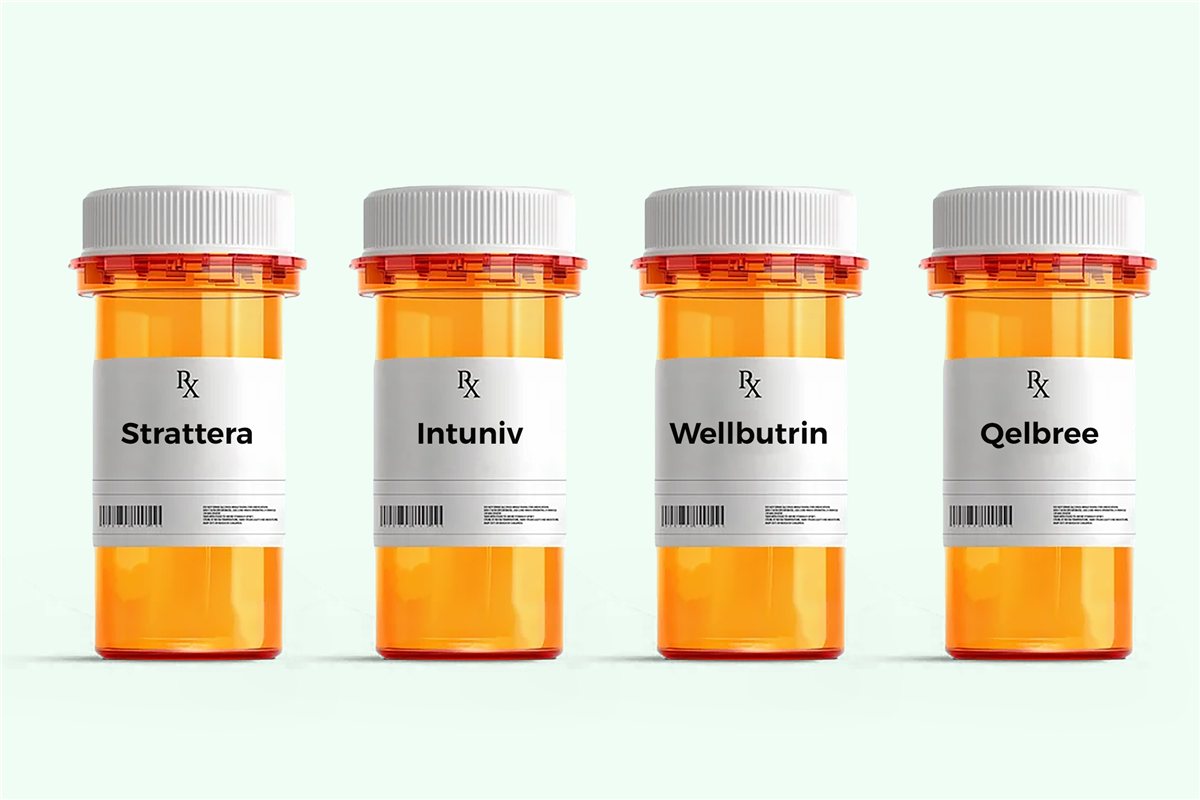
When most people think of ADHD medication, they think of stimulants. But non-stimulant medications are a real, effective option for many adults. Here is what you should know.
Atomoxetine (Strattera)
- What it is: The first non-stimulant approved for ADHD. Approved for adults and children.
- How it works: It raises norepinephrine, a brain chemical tied to attention.
- Timing: Some people notice changes in 2 to 4 weeks. Full effect can take 6 to 8 weeks or longer.
- Common side effects: Upset stomach, lower appetite, tiredness, and dry mouth.
Viloxazine (Qelbree)
- What it is: A newer non-stimulant approved for adults in 2022.
- How it works: It also affects norepinephrine, along with some serotonin activity.
- Timing: Some people notice benefits within the first couple of weeks.
- Common side effects: Sleepiness, headache, and lower appetite.
Wondering if it is ADHD? Start a same-day evaluation. Evaluations start at $195.
Start assessment →Extended-release guanfacine (Intuniv)
- What it is: Originally a blood pressure medicine. The extended-release form is approved for ADHD in children and teens and is sometimes used for adults.
- How it works: It strengthens signals in the part of the brain that manages attention and impulse control.
- Helpful for: Emotional reactivity, impulsivity, and trouble sleeping.
- Common side effects: Sleepiness, dizziness, and lower blood pressure.
Extended-release clonidine (Kapvay)
- What it is: Similar to guanfacine.
- Helpful for: Hyperactivity, irritability, and sleep.
- Common side effects: Sleepiness and lower blood pressure. It should not be stopped suddenly.
Bupropion (Wellbutrin)
Bupropion is an antidepressant that some clinicians use off-label for ADHD, especially when depression is also present.
Benefits of non-stimulants
- Steady effect all day and evening
- No controlled substance refill rules
- Low risk of misuse
- Can be combined with other treatments
Things to keep in mind
- They take longer to work, so patience matters.
- Take them every day, even on weekends.
- Tell your clinician about every side effect. Small dose changes often help.
Non-stimulants at Anora
In every state where Anora sees patients, our psychiatric nurse practitioners can prescribe non-stimulant medications when clinically appropriate. That includes Colorado, Connecticut, Florida, Georgia, Iowa, North Carolina, and Washington, DC.
The bottom line
Non-stimulants are not a backup plan. For many adults, they are the best fit. Talk with your clinician about which one matches your symptoms and goals.
Common questions
Do non-stimulant ADHD medications work for adults?+
Yes. Atomoxetine and viloxazine are FDA-approved for adults with ADHD, and many adults find them helpful.
Are non-stimulants addictive?+
Non-stimulant ADHD medications are not controlled substances and are considered to have low misuse potential.
Can I get non-stimulant ADHD medication online?+
Yes. Because they are not controlled substances, non-stimulants can be prescribed through telehealth after an evaluation in all states where Anora is licensed.
This article is for general education and is not medical advice. Talk with a licensed clinician about your own health. If you are in crisis, call or text 988.
Keep reading
Ready to get answers, not guesses? Start your same-day ADHD evaluation. Evaluations start at $195.
Start your assessment